Beneficial bird events and activities
| |
|
|
|
This Month
This summer has been a season of growth and momentum for Wild Farm Alliance. We’re honored to be featured in Rewilding Magazine for our 25 years of championing farmland habitat, and thrilled to see our Farmland Flyways Trail expand with more than 100 new bird nest boxes across the Midwest. As we turn toward fall, we’re launching two bird-focused webinars in September, welcoming Rowan O’Connell-Gates and Alayna Merchlewitz back to our team, and preparing to join farmers and advocates at Farm Aid’s 40th anniversary. Read on to discover how our farmlands are buzzing with new life, and how you can be a part of what’s next.
|
|
|
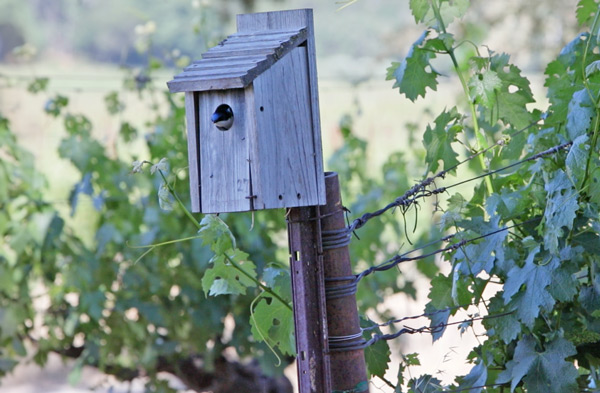
Bird Safety on Farms Webinar
Monday, September 22, 2025
11:00 am - 12:30 pm PT / 2:00 pm - 3:30 pm ET
1.5 CCA credits available
Join us to learn how to keep birds safe while benefiting from their pest control services.
Topics will include:
- Best practices for terminating cover crops to protect ground-nesting birds
- Which pesticides—conventional and organic—are most harmful to birds
- Safe nest box placement near roads and high-traffic areas
|
|
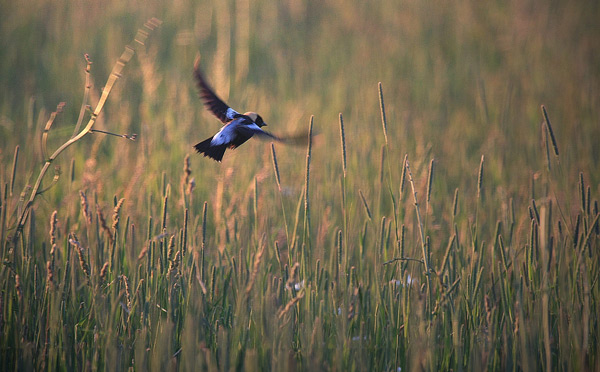 Photo: Seabamirum Photo: Seabamirum
Role of Birds on Midwest Farms Course
On September 23, we're kicking off a 10-part webinar series that will highlight how birds contribute to pest control, biodiversity, and farm resilience across the Midwest. Learn how to assess a farm’s avian needs and opportunities to provide for a diversity of beneficial birds. While many topics and species are specific to the Midwest, most of the principles discussed are applicable across regions.
Topics will include:
- Why Birds Belong on the Farm
- American Kestrels as Pest Control Allies
- How Birds Provide Pest Control Across Crop Types
- Prairie Strips and Bird Conservation
- Balancing Biodiversity and Food Safety
- Tree Swallows Helping Farmers Fight Pests
- Forestry, Farming, and Habitat
- Bird-Friendly Livestock Operations: From Grassland Conservation to Barn Swallow Fly Control
- Semi-Natural Habitats and Birds as Pest Managers
- Birds at Risk: Pesticides and Safety
|
|
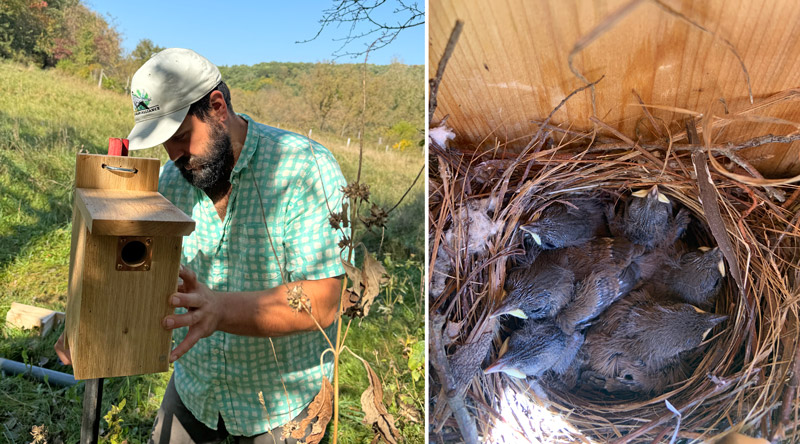
Flyways Trail Expands in the Midwest
Over the past year, Wild Farm Alliance supported the expansion of the Farmland Flyways Trail by helping 18 farms install 110 new nest boxes on Midwestern farms. As the bird habitats have taken root, WFA staff monitored their success through surveys and on-farm visits. Several of our farming partners are already reporting nesting activity from a variety of beneficial bird species, including Eastern Bluebirds, Tree Swallows, and House Wrens. Along the way, our team captured a collection of images showcasing nesting behaviors and fledgling moments – a vivid reminder of the life these boxes help nurture.
We now have 1,183 nesting structures mapped on the Farmland Flyways Trail! Support the expansion of the Trail by installing a nest box on your property and adding yourself to the map. Or, donate to support our work to grow this network of farms across the country.
|
|
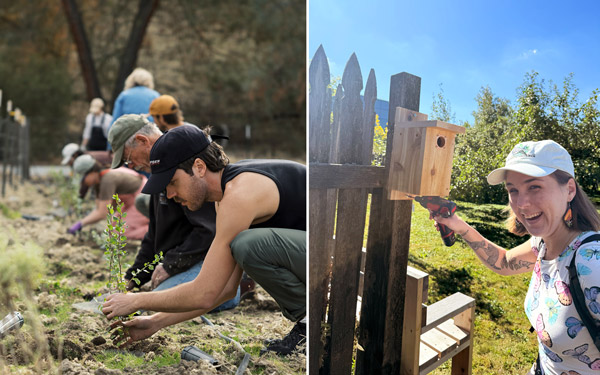
Familiar Faces in New Roles
Rowan O’Connell-Gates and Alayna Merchlewitz Join WFA Staff
We’re excited to share that Rowan O’Connell-Gates has officially joined the Wild Farm Alliance team full-time as a Program Associate. This marks the continuation of his work over the past year as a GrizzlyCorps Fellow, during which he made significant contributions to our Farmland Wildways habitat programming, communications, and farmer engagement efforts.
In his new role, Rowan will further WFA’s mission by developing educational resources, coordinating outreach, and supporting programmatic work that empowers farmers. We’re thrilled to have him on board in this expanded capacity and look forward to all that we’ll accomplish together.
We’re equally pleased to welcome back Alayna Merchlewitz, who rejoins WFA following her impactful work as a Minnesota Working Lands Conservations Corps Fellow. Alayna was a core part of our Midwest efforts until her fellowship was unexpectedly cut short during federal budget cuts in the spring.
We’re grateful to have Alayna back on the team, where she’ll help create online educational courses for agricultural professionals and continue her work to support on-the-ground conservation and community engagement in Minnesota and beyond.
|
|
WFA looks forward to participating in the 40th Anniversary of Farm Aid, an annual music festival that raises funds to promote a strong and resilient family farm system of agriculture.
We will have a table in the Homegrown Village, where festivalgoers will explore interactive exhibits and activities. Food and farm groups from across the country showcase exhibits about soil, water, energy, food and farming through art, games, and hands-on activities. If you’re attending Farm Aid, come visit us and test your beneficial bird skills.
|
|
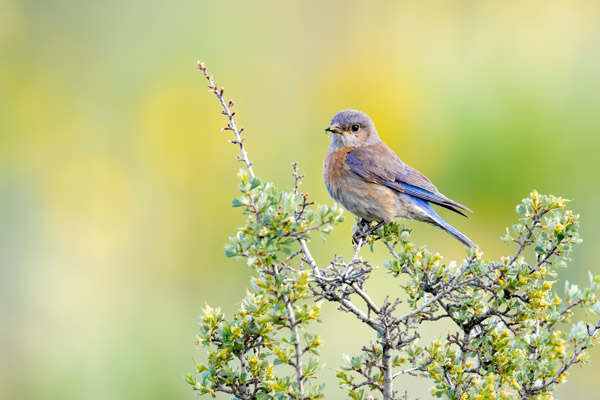
Photo: Western Bluebird by Mick Thompson
Wild Farming Benefits Crops – and Ecosystems Too
Article by Jennifer Cole in Rewilding Magazine
For wild creatures to thrive, they need to be able to move freely in search of food, shelter and breeding grounds. Historically, farms, ranches and vineyards have been carved out of wild spaces, leaving large voids where habitat used to be. Fields of corn and soy, for example, have replaced grasslands and wild meadows, nesting areas for birds such as the bobolink. Pastures forged from woodlands have disrupted the traditional foraging and hunting grounds of animals such as bears, coyotes and foxes. If this trend continues unabated, it’s estimated that almost 90 percent of the world’s birds, amphibians and mammals will lose their habitat due to agricultural expansion by 2050.
The Wild Farm Alliance’s mission stands out because of how the organization turns the tables on this statistic by advancing agriculture as a solution to the biodiversity crisis instead of a continuing cause.
|
|

Researchers used special devices to detect the ultrasonic sounds emitted by distressed plants. Photo: Tel Aviv University
Moths Can Hear Plant Distress
A new study published in eLife found that tomato plants experiencing water stress emit ultrasonic sounds that are inaudible to human ears but clearly heard by female moths. These moths use these sonic plant distress signals to decide where to lay their eggs. Experiments showed that these moths avoid plants emitting signals, demonstrating they prefer quieter, healthier plants.
The research represents some of the first scientific evidence of acoustic interaction between plants and insects, expanding our understanding of plant communication.
|
|
Wild Farm Alliance · PO Box 2570, Watsonville, CA 95077
This email was sent to [email protected] because you subscribed
Change your mind at any time: Unsubscribe
Bringing Nature Back to the Farm
|
|
|
|


