


Perched above the blue sweep of Monterey Bay, Ocean Cliff Ranch is shifting from farmland that once stretched fencerow-to-fencerow to a future shaped by habitat restoration. The ranch has been in the family of Bob Goode since the 1800’s and has seen many lives. Back when Bob’s grandfather worked the land, Brussels sprouts marched right up to the cliff edge.
After attending two Wild Farm Alliance (WFA) Field Days and learning about habitat installation benefits and techniques, Bob decided to plant native hedgerows on his farm. To make it happen, he partnered with WFA and Pollinator Partnership to plan the plantings and secure funding from one of CDFA's climate smart programs.
Bob also worked closely with Martin Quigley, whose landscape architecture sensibilities created hedgerows with sinuous, visually rich features that curve along the several locations on the farm. Bob has now planted 1.5 miles of hedgerows to the property that he has been grazing with sheep. The result is habitat with both ecological and aesthetic intention—evolving corridors of native plants designed to serve pollinators, predators of crop pests and the wild neighbors that rely on connectivity to survive. It's a dramatic change for a landscape long defined by production-first agriculture, now evolving into a place where habitat and coastal farming can coexist.
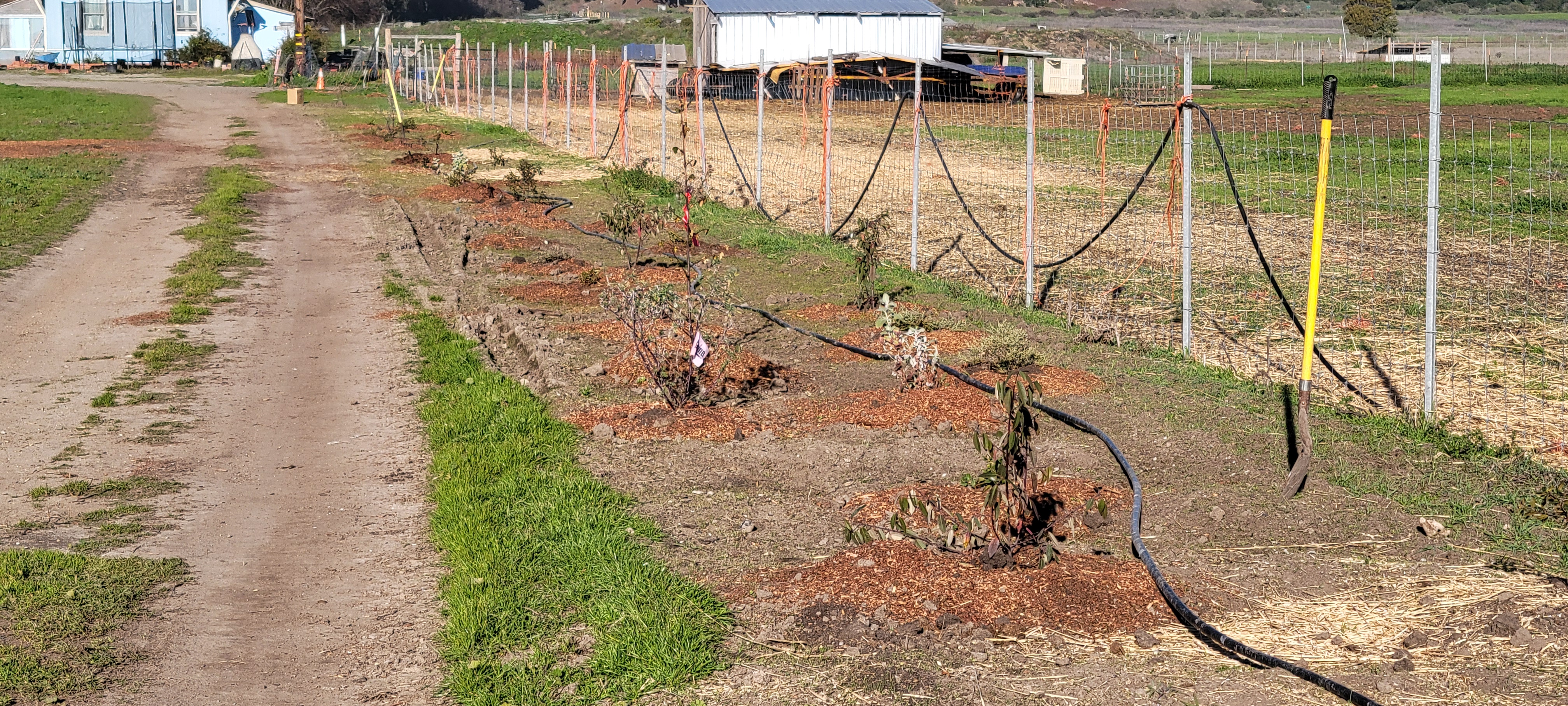
Each hedgerow plant is inoculated with compost and covered with a thin layer of mulch
Nature, of course, never fully left. The ranch shelters pockets of riparian habitat, and during a recent visit, a bobcat slipped into a riverine thicket as if to remind us of who else calls this place home. Bob’s goal is to bring more of that wildness back into the working farm, stitching habitat not just along the margins but throughout the fields where it can support beneficial insects, and rodent- and insect-eating birds with a series of wildlife corridors that move through the property.
This past year Bob began the process of transferring the land to a local land trust, with plans underway to convert the property into an incubator site for a new generation of small farmers. If all goes as envisioned, these freshly planted hedgerows will form the living backbone of a more resilient, biodiverse, and regenerative agricultural landscape— one where food production and wildlife habitat grow side by side, offering a model for how California’s coastal farms can cultivate both nourishment and ecological renewal.
Hedgerow Information
Location: Santa Cruz, California
Total Hedgerow Length: 8,302 ft
Goals: Habitat for beneficial insects and birds, conservation and habitat restoration
Total Plants: 1,367
Funding from the CDFA Pollinator Habitat Program helped to support this planting.