


BY KATIE DONALDSON, WFA WLCC GRIZZLEYCORP FELLOW
On February 24, Wild Farm Alliance was honored to receive an Integrated Pest Management (IPM) Achievement Award from the California Department of Pesticide Regulation (DPR) during a ceremony celebrating leaders in sustainable pest management across California.
The annual IPM Achievement Awards recognize individuals, organizations, and partnerships that demonstrate leadership in Integrated Pest Management. Our Executive Director, Jo Ann Baumgartner, attended the event and accepted the award on behalf of the Wild Farm Alliance team and the many farmers, partners, and supporters who make this work possible.
For us, this recognition is both a moment of celebration and a reminder of what’s possible when agriculture works with nature.
Why This Award Matters
The IPM Achievement Award affirms something farmers and researchers have been observing for years: conservation biological control works.
When farms make room for nature, nature shows up.
Habitat on farms supports beneficial insects, birds, and other organisms that help keep pest populations in check. Biodiversity strengthens resilience in the face of climate pressures. And farmers across California are increasingly seeking practical, effective alternatives to heavy pesticide reliance.
This recognition from DPR reinforces that habitat-based pest management is not theoretical, it’s a proven strategy that can help build a safer and more resilient agricultural system.
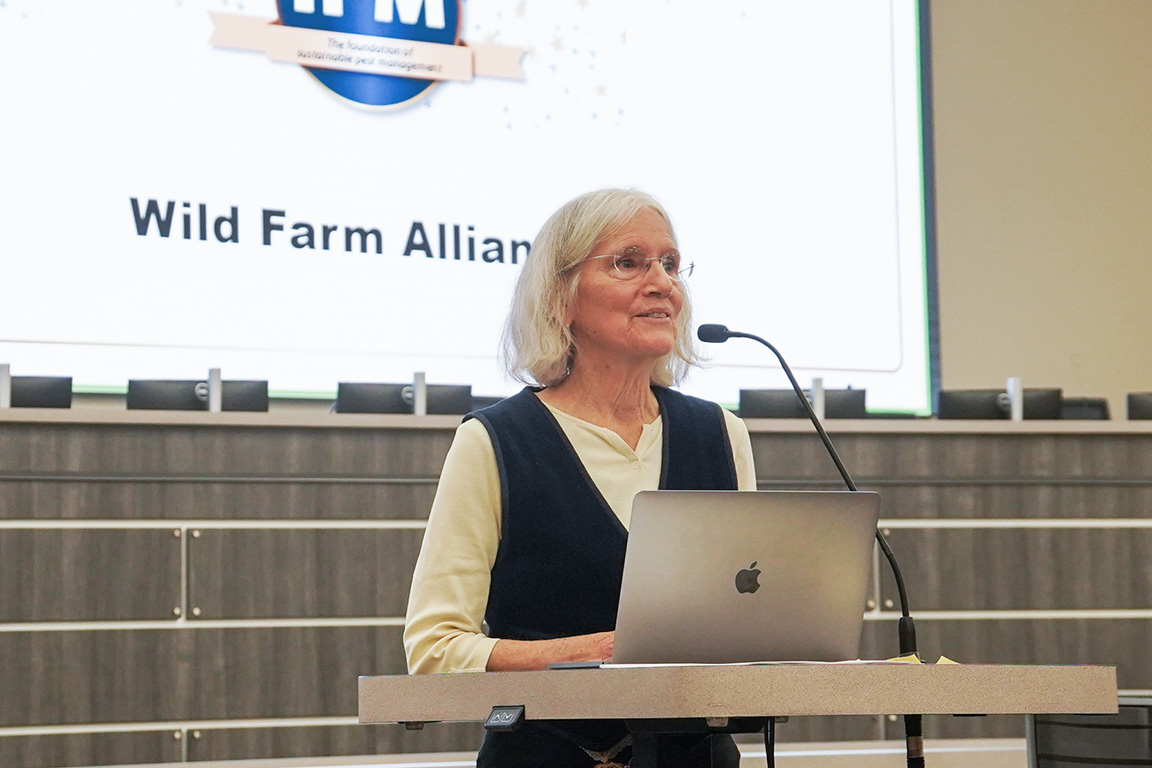
Executive Director Jo Ann Baumgartner giving an acceptance speech
“We know conservation biological control works —
but we are running out of time
to understand and protect the biodiversity that makes it possible.”
- Jo-Ann Baumgartner, Executive Director at Wild Farm Alliance
As Jo Ann shared in her remarks at the ceremony, Wild Farm Alliance strongly supports DPR’s Sustainable Pest Management (SPM) Roadmap and wants to see it fully implemented across California agriculture.
But there is urgency behind this work. Conservation biological control depends on biodiversity and we are rapidly losing the species that make these natural systems function. Every season that passes without change means fewer beneficial organisms, fewer natural checks and balances, and fewer opportunities to shift toward safer pest management systems.
Protecting and restoring biodiversity on farms is not optional. It’s essential. We are proud to partner with DPR in building a pathway toward wide-scale adoption of sustainable pest management.