Over 2,000 plants thanks to you!
|
As we head into the season of gathering, WFA gratefully acknowledges the farmers and farmworkers whose labor to put food on our tables makes the feasts ahead possible in communities across the country. We also thank the many land stewards who are working to improve ecosystem health and biodiversity. And we honor the Indigenous peoples who first stewarded these lands and continue to draw on their traditional ecological knowledge to protect and restore wild nature.
In this issue, we share highlights from two educational habitat planting events and a farm profile showing how a large-scale hop operation makes room for diversity. We also invite you to join our efforts to bring more habitat to farms in 2027, to attend a partner soil health summit in Oregon, and to explore a new conservation practices guide from the National Sustainable Agriculture Coalition.
|
|

Students Learn about On-Farm Biodiversity at Demonstration Hedgerow Plantings in California’s Central Valley
By Kalea Conrad, GrizzlyCorps Fellow
In November, WFA co-hosted two demonstration planting events with the National Center for Appropriate Technology (NCAT) and groups of high school students from California's Central Valley. To prepare for the plantings, I visited both farms and saw firsthand everything that goes into smooth site preparation and hedgerow installation. Beyond the materials, time, and labor that on-farm habitat projects require, these days showed me how much success depends on communication, coordination, physical strength, adaptability, and patience. We enjoyed working with aspiring conservationists and sharing our vision for more resilient agroecosystems at each event.
|
|

Farmer Profile: Diversified Hop Growing at Gooding Farms
Gooding Farms in Parma, Idaho is run by sisters Michelle Gooding-Badiola, Diane Gooding, and Andrea Gooding. They are sixth generation hop growers with 650 acres of hops and another 650 acres of vegetable row crops and livestock. Their diversified operation relies on cover crops and beneficial insects to grow hops sustainably at a large scale.
|
|

Help Us Get to the Moon and Back
This year, WFA participated in 11 habitat planting events across four states with more than 2,000 native plants in the ground. Thanks to farmers and supporters like you, more acres are being transformed into thriving habitat for pollinators, birds, and other wildlife.
These habitats don’t just benefit wildlife. They’re also powerful allies on the farm, providing natural pest control, improving water infiltration, preventing erosion, and more. It’s a true win-win!
Clare Hintz of Elsewhere Farm is one of the farmers we partnered with this year. On a sunny September afternoon near the Wisconsin shore of Lake Superior, we knelt beside Clare to plant native wildflowers and shrubs on land she’s nurtured for 25 years.
Clare has woven biodiversity into Elsewhere Farm bit by bit. Ground-nesting birds and pollinators find refuge among pig-grazed orchards and raptors soar overhead. As our planting grows, it will give nature even more ways to do what it has always done here: help the farm thrive.
This years’ 2,000 plants brings us closer to our big goal, Hedgerows to the Moon and Back: enough native habitat on farmland to stretch 500,000 miles.
Every native habitat we plant strengthens biodiversity, makes our food system more resilient, and helps address climate change.
Will you help us keep going?
A gift of $100 plants about 10 feet of hedgerow on a partner farm, feeding pollinators, sheltering birds, and protecting the soil for decades to come.
|
|

Register for the Oregon Soil Health Summit
February 4th, and 5th 2027
OSU LaSells Stewart Center, Corvallis, OR
The Oregon Climate and Agriculture Network invites you to the 2027 Oregon Soil Health Summit: a gathering of Oregon’s agricultural community to promote soil health for climate resilience.
The summit will include sessions on soil fundamentals, new research, resources for soil on-farm practices, plus keynote speakers and networking opportunities. Scholarships are available!
|
|
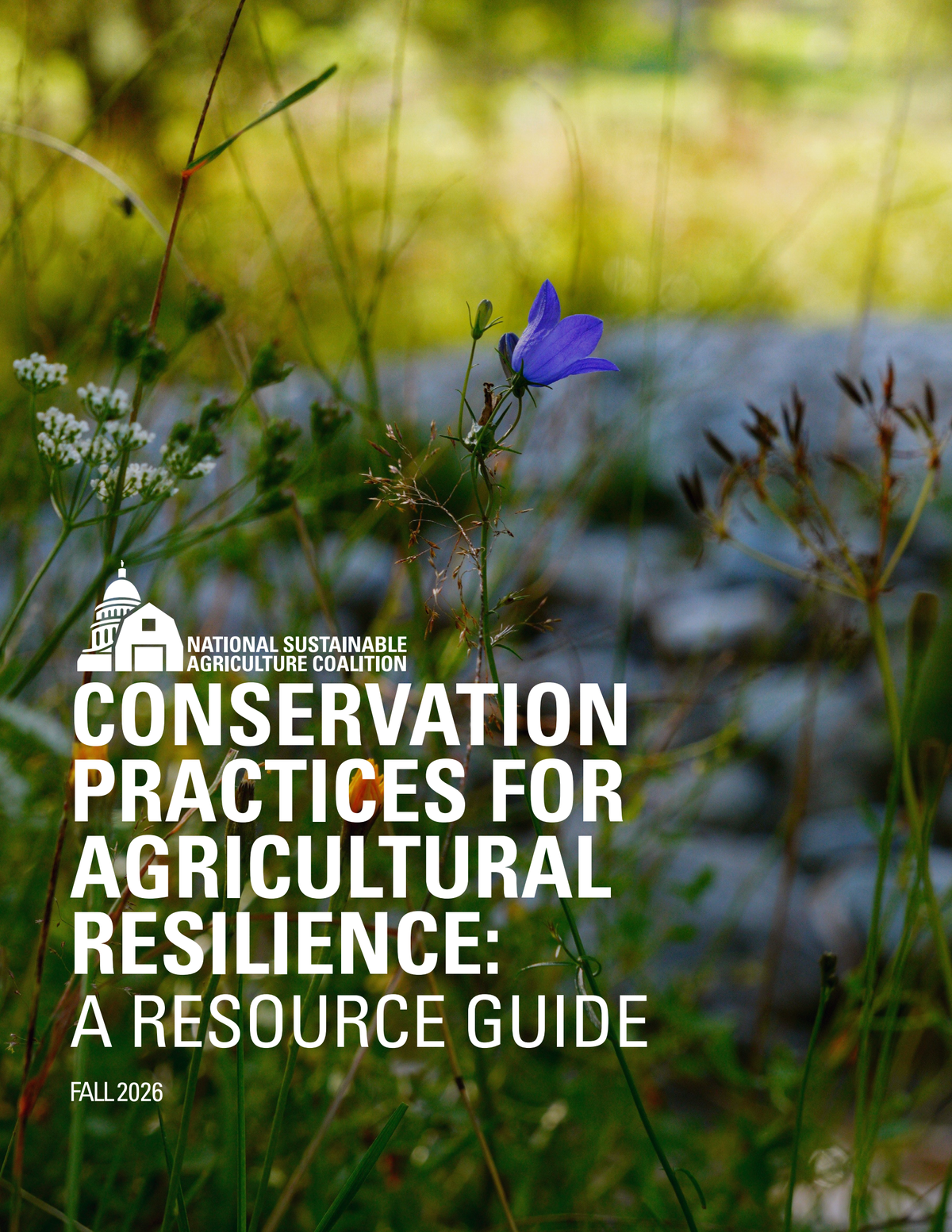
Conservation Practices for Agricultural Resilience: A Resource Guide from NSAC
The National Sustainable Agriculture Coalition (NSAC) has released Conservation Practices for Agricultural Resilience: A Resource Guide. The publication identifies 30 USDA Natural Resources Conservation Service (NRCS) conservation practice standards that can help farmers and ranchers build resilience to drought, flooding, and other extreme weather while improving soil health, protecting water quality, reducing greenhouse gas emissions, and lowering input costs.
For each practice, the guide outlines the resource concerns it addresses, supporting and companion practices that can increase effectiveness, and considerations for implementation. Example scenarios show how practices can work together in annual cropping, perennial systems, livestock production, and organic management. The guide is designed for producers and the planners and organizations who work with them, and it can help shape conservation plans that fit in an operation’s goals, resources, and regional conditions.
|
|
Wild Farm Alliance · PO Box 2570, Watsonville, CA 95077
This email was sent to [email protected] because you subscribed
Change your mind at any time: Unsubscribe
Bringing Nature Back to the Farm
|
|
|
|


