


Wild Farm Alliance, Rancho Corralitos, and the Resource Conservation District of Santa Cruz County (RCD) brought together farmers, ranchers, and conservation professionals for an inspiring, bilingual, hands-on learning event.
Participants explored how hedgerows and on-farm habitat can support pollinators, beneficial insects, and overall farm resilience. They learned how healthy soils, thoughtful compost use, and well-managed cover crops contribute to natural pest management and stronger ecosystems. Field tours offered a close look at both newly planted and mature hedgerows, highlighting the successes and lessons from each practice. The day also included a hands-on demonstration of the Whole Farm Scouting Tool, giving attendees practical experience they could take home to their own farms.
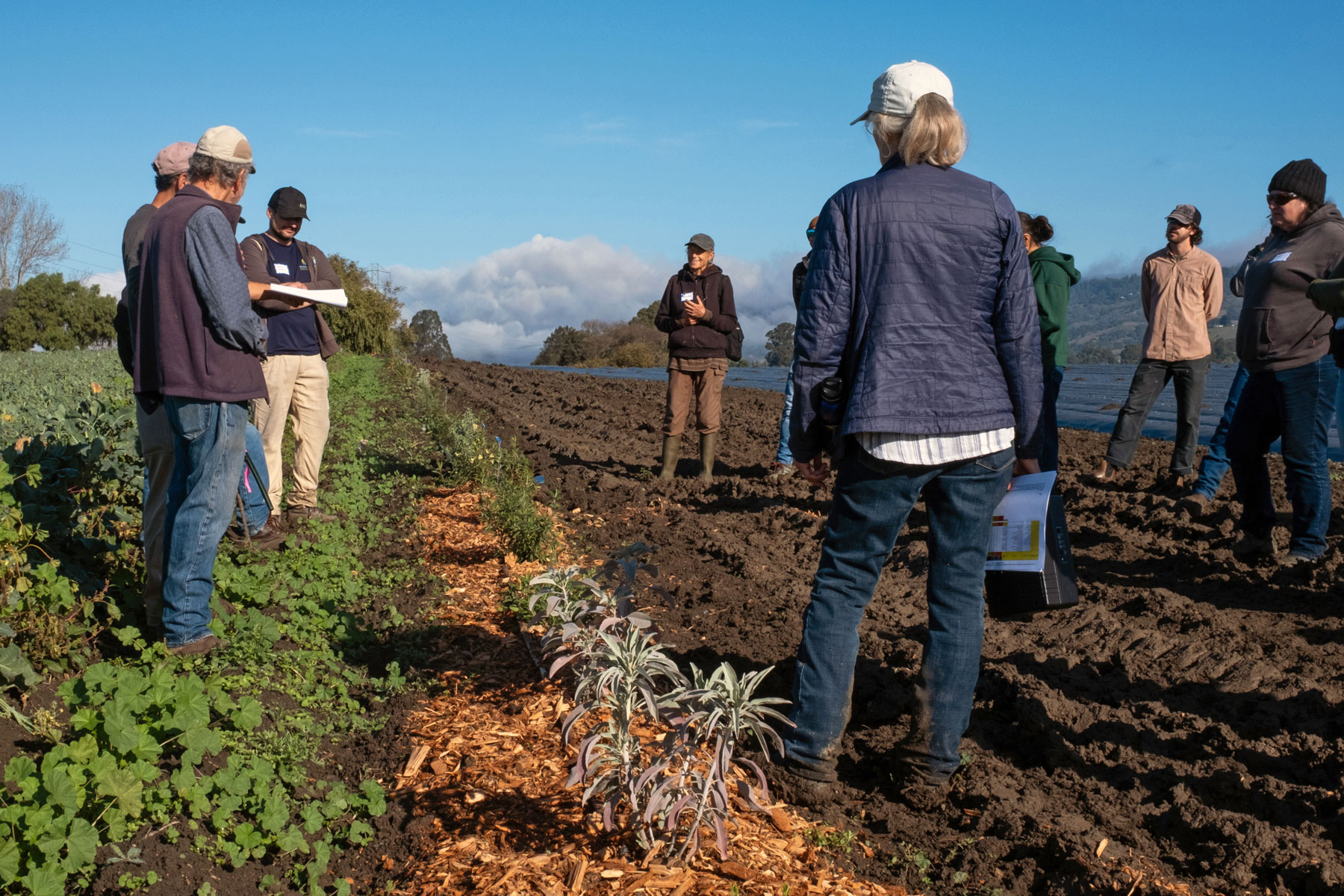
Discussion of a young hedgerow and its benefits to farm production.
Featured Speakers & Highlights
A Farmer’s Perspective on Why to Plant a Hedgerow
Standing next to his newly planted hedgerow, Adelio Coronel (Coronel Produce / Rancho Corralitos) shared how he became interested in hedgerows after noticing reduced pest pressure in fields bordered by natural habitat at another one of his farms. He explained that he hopes to see whether similar benefits occur at this site and to evaluate concerns about rodents. He’s currently gathering firsthand insights to share with others if the practice proves useful. He’s also focused on improving habitat connectivity across the farm. With nearby wetlands already supporting wildlife, Adelio believes adding plant diversity and linking hedgerow corridors could boost both ecological health and farm productivity.
Hedgerow Stewardship at Rancho Corralitos
Sacha Lozano (RCD) discussed how he and our partners helped Adelio plant the new hedgerow featuring 160 mostly native, drought-tolerant plants composed of 20 species. He also pointed out how the property supports many 25-year-old hedgerows and riparian plantings installed by CAFF and WFA.
Hedgerow Installation & Management
Sam Earnshaw (Hedgerows Unlimited) shared decades of hedgerow experience, covering site selection, planting techniques, irrigation, monitoring and maintenance. He described how the native plants used in Adelio’s hedgerow are chaparral shrubs and low-growing natives found in the surrounding natural areas.
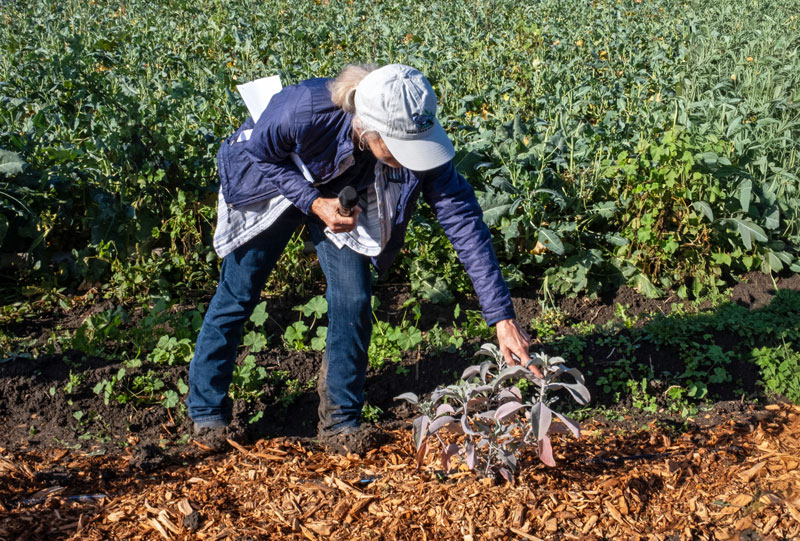
Jo Ann Baumgartner points out that White Sage supports beneficial insects and birds, and flowers most of the year.
Biodiversity Benefits of Native Plants
Jo Ann Baumgartner (WFA) highlighted the many benefits that native plants provide, especially their role in supporting natural enemies—both insects and birds—that contribute to pest control. She emphasized how native habitat boosts these beneficial species, noting examples such as how pollen resources support predator mites that attack pest mites in strawberries and that consume thrips in brassicas and lettuce.
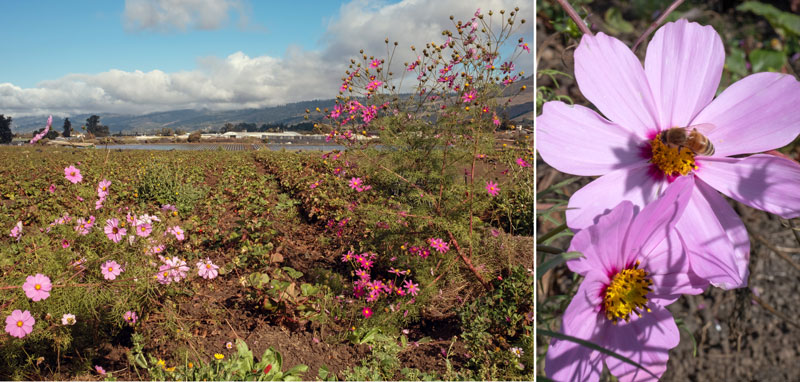
Planting annual flowers is an easy way to provide habitat for pollinators and natural enemies.
Pollinators and Plant Diversity
Deedee Soto (Xerces Society) emphasized the importance of using a diverse mix of annual and perennial flowering plants on the farm. Pollinators rely on continuous sources of nectar and pollen to feed their young and fuel their flight, making plant diversity essential for healthy, supportive habitat.
Supporting Biocontrol in Cool-Season Crops
Saul Alba (Biobee) shared how strategic plantings of annual habitat interspersed in the crops boosts beneficial insects for pest control in cool-season crops. Annual flowers are inexpensive to plant and don’t tie up the land permanently. He also shared insights on current biocontrol releases.
Scouting to Support the Whole Farm
Doug O’Brien (Pleasure Point Farm and D.O. Agricultural Consulting) demonstrated Whole-Farm Scouting (WFS), an approach to tracking pests, beneficials, soils and plant health. He described when, where and how to scout using the Whole Farm Tool. WFS helps make proactive decisions, reduce pesticides, and strengthen farm ecosystems.
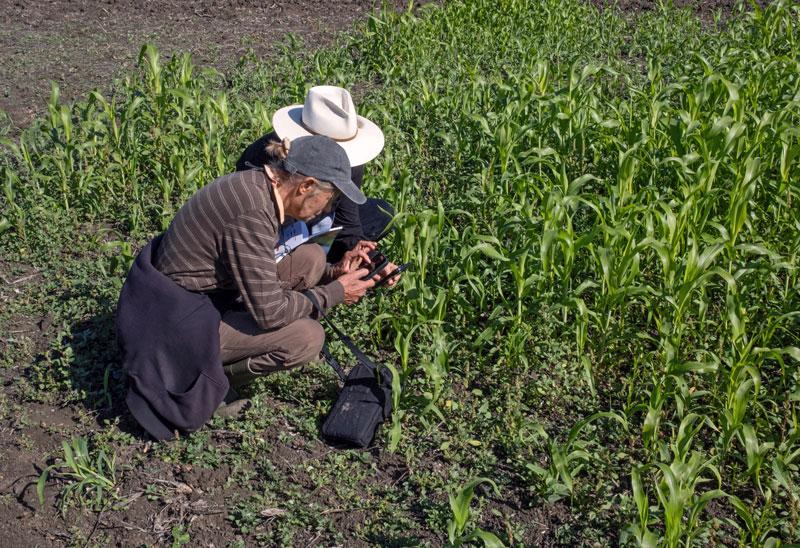
Attendees examine the sorghum, cowpea, annual buckwheat and phacelia cover crop.
How Cover Crops Can Help Manage Pests
Daniel Hoffman (National Center for Appropriate Technology) and Adelio Coronel discussed integrating cover crops into production systems, including timing and benefits for attracting beneficial insects. Adelio highlighted how planting a mix of species supports soil health, controls weeds, and provides flowers that attract lacewings to help manage pests.
How Composting Can Building Soil Health
Sara Tiffany (Community Alliance with Family Farmers) explained how compost boosts soil structure, water retention, and nutrients. Healthy soil supports stronger plants, beneficial microbes, and insects, complementing cover crops for a resilient farm.
Why It Matters
Farms that work with nature gain lasting benefits: hedgerows and other habitat features boost resilience, support pollinators, reduce pests, prevent erosion, and improve soil and ecosystem health. The event also highlighted the importance of inclusive, bilingual education and the power of collaboration–partnerships between nonprofits, farmers, and agencies make knowledge-sharing possible and impactful.
Action Steps / How to Get Involved
- Attend future field days or trainings from WFA or local RCDs.
- Read and share WFA’s Installing Habitat to Increase Farm Diversity publication
- Download and use the Whole Farm Scouting Tool
- Connect with featured organizations for technical support or networking.
- Share what you learned with peers!